Attorneys for German Corporate Law in Landau (Pfalz)
Your Attorneys for GmbH, Start-ups & Medium-Sized Businesses
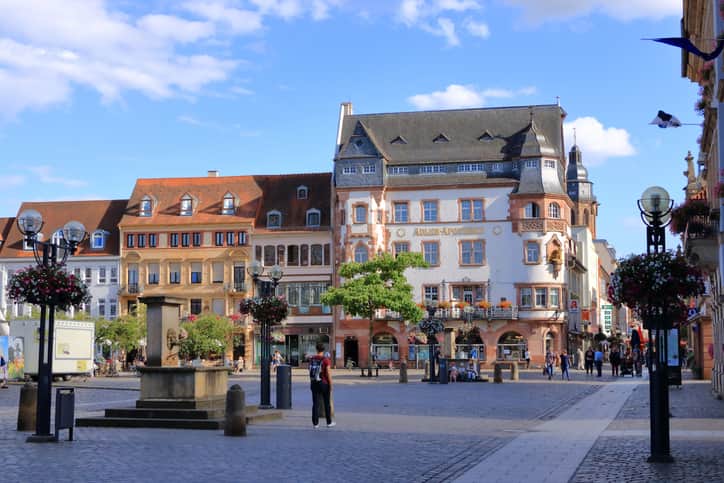
The economic structure of the Landau (Pfalz) region, with its family-owned businesses, wine cooperatives, and medium-sized enterprises, requires specialized expertise in German corporate law. From the formation of a German limited liability company (GmbH) and shareholder agreements to corporate succession in family businesses, we support our clients in all matters of corporate law. The proximity to the border and economic ties to France and Switzerland introduce additional international aspects.
The Regional Court (Landgericht) of Landau and the Palatinate Higher Regional Court (Oberlandesgericht) of Zweibrücken regularly adjudicate corporate law disputes from the region. We represent our clients before all competent German courts and leverage our comprehensive knowledge of current German and European corporate case law to provide optimal legal counsel in the Southern Palatinate.

Our Experts for German Corporate Law in Landau


Recent judgments from Landau (Pfalz) and the surrounding area (As of 2026)
Facts: A gate on a property in Zweibrücken, which belongs to a German GbR (civil law partnership) ("... GbR"), was damaged in an accident. One of the shareholders personally sued for damages and demanded payment to himself. The Regional Court dismissed the lawsuit. The shareholder appealed.
Key Norms:
- Sec. 705 BGB (Legal capacity of the GbR): An external civil law partnership has legal capacity itself and is the owner of its assets.
- Actio pro socio: The right of a shareholder to assert claims of the company in their own name – but generally for payment to the company, not to themselves.
- Sec. 249 BGB (Damages): Principle of restitution in kind, restricted by the prohibition of enrichment ("new for old" deduction).
Decision: The German Higher Regional Court (OLG) Zweibrücken announced it would dismiss the appeal. It cited two main reasons: 1. Lack of active legitimation/authority to sue: The owner of the gate is the GbR, not the individual shareholder. He therefore cannot demand payment to himself. An "actio pro socio" would also have to be directed at payment to the GbR. 2. "New for old" deduction: Even if the lawsuit were admissible, the damages would have to be reduced. Since the gate experiences an increase in value through the repair (extension of its lifespan), the company must have this advantage offset. The plaintiff had not provided sufficient information on the age and condition of the gate to calculate this deduction or to demonstrate an "unreasonable hardship".
Conclusion: If company assets of a GbR are damaged, the GbR must sue or the shareholder must sue for payment to the GbR. Anyone seeking damages for a used item often has to accept a "new for old" deduction if the repair results in an increase in value.
Aktenzeichen: Higher Regional Court (OLG) Zweibrücken, Order of Reference of Feb 7, 2025 – 1 U 153/24
Higher Regional Court (OLG) Zweibrücken, Order of Reference of Feb 7, 2025 – 1 U 153/24
Facts: The managing director of a German GmbH (in the district of the LG Frankenthal/OLG Zweibrücken) fell for professional phishing emails. A scammer posed as the contact person of a long-standing supplier, forged the email address minimally ("w...flim" instead of "w...film"), and prompted the managing director to make several transfers to foreign accounts. The GmbH sued for damages in the amount of approx. 84,000 US dollars. The sole shareholder had been copied in part of the communication.
Key Norms:
- Sec. 43 Para. 1 GmbHG: Duty of care (Application of the diligence of an ordinary businessman).
- Sec. 43 Para. 2 GmbHG: Liability (Liability for damages in the event of a breach of these duties).
Decision: The German Higher Regional Court (OLG) Zweibrücken dismissed the lawsuit. 1. No breach of corporate duty: The court evaluated the execution of transfers as a pure "accounting activity" and not as a specific management task ("corporate leadership"). Therefore, Sec. 43 Para. 2 GmbHG is not directly applicable at all, but rather the general tortious standard or employment law principles. 2. Liability privilege: Even assuming a breach of duty, the managing director acted only with slight negligence. The forgery was professional and hard to detect. Analogous to employees (internal damage compensation), a managing director is not liable for only slight negligence in such "everyday transactions". 3. Consent of the shareholder: Since the sole shareholder was involved in the communication (CC) and did not object, there was also implied consent, which likewise excludes liability.
Conclusion: Managing directors are not automatically liable for damages caused by phishing scams if they act only with slight negligence and the transfer activity does not constitute a specific management task. In addition, the (implied) consent of all shareholders protects against liability.
Aktenzeichen: Higher Regional Court (OLG) Zweibrücken, Judgment of Aug 18, 2022 – 4 U 198/21
Higher Regional Court (OLG) Zweibrücken, Judgment of Aug 18, 2022 – 4 U 198/21
Facts: A public company (plaintiff) demanded outstanding contributions in the amount of 3,300 euros from an investor (defendant). The investor had not participated directly in the company, but via a trustee ("trustor-limited partner"). The company argued that it could demand the payment directly from the investor, or at least from the assigned right of the trustee. The special feature was that the company had been prohibited by a supervisory order from accepting new deposits (winding-up order).
Key Norms:
- Sec. 161 HGB: Liability of the limited partner (actually only up to the contribution, but modified here by the trust construction).
- Secs. 275, 326 BGB: Impossibility of performance (If the consideration – here: establishment of new limited partnership shares – is legally prohibited, the obligation to pay is also dropped).
Decision: The German Regional Court (LG) Landau dismissed the lawsuit and confirmed the judgment of the Local Court (AG) Kandel. 1. No direct claim: The investor is only obliged to pay the trustee, not the company itself. The contractual regulations did not make him a "quasi-shareholder" with direct obligations towards the KG. 2. No claim from assignment: The assigned claim of the trustee does not apply either. Since the company was officially prohibited from accepting new contributions, it can no longer legally provide the contractual consideration (increase in the limited partner's share for the investor) ("impossibility"). If the consideration is impossible, the investor's obligation to pay also lapses according to Sec. 326 BGB.
Conclusion: Trustor-limited partners are well protected with certain contract designs: They do not have to pay directly to the company. If the company has also been prohibited from conducting new business, open contributions can often no longer be demanded even via the trustee, since the purpose of the payment (to receive shares) can no longer be fulfilled.
Aktenzeichen: Regional Court (LG) Landau, Judgment of Mar 14, 2017 – 1 S 117/16
Regional Court (LG) Landau, Judgment of Mar 14, 2017 – 1 S 117/16
Facts: A German GmbH & Co. KG (public company) was in liquidation after BaFin (Federal Financial Supervisory Authority) had revoked its business license. The company sued a trustor-limited partner who had stopped making her monthly contribution payments. The proceedings had already reached the German Federal Court of Justice (BGH), which had referred it back to clarify whether the contributions were required for the winding up of the company or the internal settlement among the shareholders. The plaintiff could no longer prove the necessity for the external winding up, as the liquidation was well advanced. Instead, it relied on a "provisional settlement plan" and demanded payment for internal settlement among the shareholders.
Key Norms:
- Sec. 149 HGB: Liquidation (Regulates the winding up of the company; contributions may only be called in if they are necessary to satisfy creditors or for settlement among the shareholders).
- Sec. 256 ZPO: Action for declaratory judgment (Admissible to establish that a claim is to be included as an accounting item in the settlement account).
Decision: The German Higher Regional Court (OLG) Zweibrücken dismissed the application for payment, but upheld the auxiliary application for a declaratory judgment. 1. No obligation to pay: A direct payment cannot be demanded, as no final settlement plan was available. A "provisional" plan or rough estimates are not sufficient to legally establish a passive balance to the detriment of a shareholder. This requires an approved final balance sheet. 2. Establishment as an accounting item: However, the outstanding contribution claim of 24,500 euros is not extinguished. It is to be included as a dependent accounting item in the final settlement account. 3. Interest: Default interest on the contribution can only be demanded up to the point in time when it was established that the money was no longer needed for the external winding up (here: Dec 31, 2014).
Conclusion: During the liquidation phase of a public company, outstanding contributions cannot simply be sued for "in reserve". A solid final balance sheet is required for internal settlement. Until then, the claims can only be "established" (declaratory judgment), but not executed.
Aktenzeichen: Higher Regional Court (OLG) Zweibrücken, Judgment of Dec 20, 2016 – 4 U 3/15
Higher Regional Court (OLG) Zweibrücken, Judgment of Dec 20, 2016 – 4 U 3/15
Facts: An association (registered at the German Local Court (AG) Landau in der Pfalz) conducted a board election in its general meeting. The entire board (1st and 2nd chairman, secretary, treasurer, youth warden, assessors) was elected "en bloc", i.e., voted on in a single ballot for all positions simultaneously. The AG Landau rejected the registration of the new board via an interim order because the articles of association did not provide for such a block vote. Furthermore, it demanded a repetition of the election. The association appealed and argued that the members had unanimously agreed to the block vote in advance.
Key Norms:
- Sec. 32 BGB: Principle of individual election (General meeting decides by resolution; in the case of elections, generally on each position individually, so as not to restrict the right to vote).
- Sec. 40 BGB: Autonomy of the articles of association (The articles of association can make deviating regulations, e.g., allow block voting).
- Sec. 382 FamFG: Interim order (Serves to remedy obstacles, but must not impose a condition that de facto amounts to a new undertaking of the legal transaction).
Decision: The German Higher Regional Court (OLG) Zweibrücken lifted the interim order for formal reasons (the condition for a new election was procedurally incorrect), but fully confirmed the legal opinion of the local court on the merits: 1. Invalidity of the election: A block vote massively restricts the voting right of the members (one can only vote "all or nothing"). It is therefore only permissible if the articles of association expressly allow it. 2. No cure by resolution: The fact that the general meeting spontaneously agreed to the block vote before the election does not cure the defect. Such a "breach of the articles of association" is invalid because it creates a long-lasting unlawful state (term of office of the board) and is not a mere selective measure.
Conclusion: Boards cannot be elected "as a package" unless the articles of association explicitly allow it. A spontaneous resolution by the meeting ("Let's do this faster today") is not sufficient and leads to the nullity of the election.
Aktenzeichen: Higher Regional Court (OLG) Zweibrücken, Order of Jun 26, 2013 – 3 W 41/13
Higher Regional Court (OLG) Zweibrücken, Order of Jun 26, 2013 – 3 W 41/13
Facts: The defendant joined a real estate fund and committed to monthly installment payments of 420 euros. After a few months, he stopped making payments. Years later, he revoked his declaration of accession. The fund company sued in documentary proceedings for payment of the outstanding installments (a total of 16,800 euros). It argued that the revocation was invalid and even if it were valid, the installments incurred up to that point still had to be paid.
Key Norms:
- Sec. 312 BGB (old version): Door-to-door sales (Regulates the right of withdrawal for contracts concluded in a door-to-door situation).
- Sec. 355 BGB: Right of withdrawal (Determines periods and consequences of withdrawal; an incorrect policy means that the withdrawal period never begins).
- Sec. 730 BGB: Dissolution (After the termination of a company, a dissolution takes place; individual claims such as installment payments can then no longer be asserted in isolation -> enforcement block).
Decision: The German Regional Court (LG) Landau dismissed the lawsuit. The court found that the fund company had contractually granted the investor a right of withdrawal based on the statutory rules. However, the cancellation policy was incorrect because it did not sufficiently inform the investor about his rights (in particular about what happens to the payments he has already made). Therefore, the withdrawal period never started, and the late revocation was valid. Consequence of the revocation: The corporate relationship ends (ex nunc). The so-called enforcement block (Durchsetzungssperre) applies. The company can no longer demand open installments. Instead, an overall settlement (dissolution) must take place, which determines what the investor is entitled to or what he may still have to pay. An isolated lawsuit for the installments is inadmissible.
Conclusion: An incorrect cancellation policy allows investors to exit a fund even years after joining. With the revocation, the relationship transforms into a winding-up relationship; open installments can then no longer simply be sued for, but are merely dependent items in the final settlement.
Aktenzeichen: Regional Court (LG) Landau, Judgment of May 20, 2010 – 4 O 431/09
Regional Court (LG) Landau, Judgment of May 20, 2010 – 4 O 431/09
Facts: The plaintiff owned a one-third share in a German GmbH (limited liability company) and was also its managing director. The company had its registered office in the district of the German Regional Court (LG) Landau in der Pfalz. After the plaintiff had been absent due to illness for over five and a half months, his co-shareholders resolved to dismiss him and terminate his employment contract. The plaintiff defended himself against this and initially won before the LG Landau. In the appeal proceedings before the OLG Zweibrücken, however, it emerged that the plaintiff had been drawing a full occupational disability pension since the time of his dismissal.
Key Norms:
- Sec. 38 GmbHG: Revocation of appointment (Regulates the dismissal of managing directors, generally possible at any time, unless the articles of association stipulate otherwise).
- Sec. 242 BGB: Good faith (Here: Fiduciary duties among shareholders can restrict the free revocability).
Decision: The German Higher Regional Court (OLG) Zweibrücken overturned the judgment of the previous instance and declared the dismissal valid. The court clarified: Even if the articles of association do not provide for a restriction, the dismissal of a shareholder-managing director is not completely free due to corporate fiduciary duties, but requires an "objective reason". However, this reason does not have to reach the weight of an "important reason" (as is the case with a termination without notice). A permanent illness that makes it impossible to exercise the office (evidenced here by the receipt of the occupational disability pension) constitutes such an objective reason. The fact that this reason was only introduced later in the trial was harmless, since it objectively already existed at the time of the dismissal.
Conclusion: A shareholder-managing director can be dismissed if an "objective reason" exists; the hurdle of the "important reason" does not have to be cleared. Permanent illness and the receipt of an occupational disability pension justify the dismissal, as the company is not obliged to keep the position vacant permanently. Reasons that already existed at the time of the resolution can be introduced later in the proceedings.
Aktenzeichen: Higher Regional Court (OLG) Zweibrücken, Judgment of Jun 5, 2003 – 4 U 117/02
Higher Regional Court (OLG) Zweibrücken, Judgment of Jun 5, 2003 – 4 U 117/02
Facts: The shareholders of a German GmbH (registered office in the Landau/Zweibrücken district) resolved to completely redraft their partnership agreement (articles of association). A notary certified this resolution, which contained the complete new text of the articles of association, and submitted it to the commercial register. However, he refrained from attaching a separate "certificate pursuant to Sec. 54 Para. 1 Sentence 2 GmbHG", which normally confirms that the new text matches the old one (except for the changes). The German Local Court (AG) Landau rejected the registration because this certificate was missing.
Key Norms:
- Sec. 54 Para. 1 Sentence 2 GmbHG: Formal requirement for amendments to the articles of association (Normally requires in the case of amendments that the complete wording of the articles of association is submitted, combined with a notarial certificate of the conformity of the unchanged parts with the previous register status).
Decision: The German Higher Regional Court (OLG) Zweibrücken ruled in favor of the notary and instructed the AG Landau to register the articles of association. The court decided teleologically: The purpose of the notarial certificate is to create clarity for legal transactions as to which text currently applies. But if the shareholders resolve anew on the entire articles of association anyway and this complete text is notarially certified, the clarity is already provided by the deed itself. An additional certificate that the text matches the resolution would be a pointless formality ("duplication"), since the resolution itself is the new text.
Conclusion: If shareholders resolve a complete redrafting of the articles of association and this entire text is certified, the otherwise mandatory notarial certificate of conformity according to Sec. 54 GmbHG is dispensable. The deed itself is sufficient as proof for the register court.
Aktenzeichen: Higher Regional Court (OLG) Zweibrücken, Order of Oct 10, 2001 – 3 W 200/01
Higher Regional Court (OLG) Zweibrücken, Order of Oct 10, 2001 – 3 W 200/01
Facts: A winegrower and member of a winegrowers' cooperative in the Landau area failed to deliver grapes for several years, although he was obliged to do so according to the articles of association. He had attempted to terminate his membership both ordinarily and without notice, as he felt economically threatened by resolutions of the cooperative (offsetting of overpayments) and accused the management of mismanagement. The cooperative sued for damages due to non-performance (lost profit).
Key Norms:
- Sec. 65 GenG: Termination without notice (Requires that remaining in the cooperative is unreasonable for the member for important personal or economic reasons).
- Cooperative Duty of Loyalty: Obliges members to protect the interests of the community and prohibits harming the cooperative through the ruthless pursuit of their own interests.
- Sec. 325 BGB (old version): Damages due to non-performance (Here: Compensation for the lost profit, since the cooperative was not allowed to procure the grapes elsewhere).
Decision: The German Higher Regional Court (OLG) Zweibrücken confirmed the judgments of the German Regional Court (LG) Landau and ordered the winegrower to pay damages. The court stated: 1. The ordinary termination only took effect after the expiration of the five-year notice period (2002). 2. A termination without notice was invalid because the winegrower did not sufficiently substantiate his existentially threatening situation. 3. Breach of the duty of loyalty: Especially in economically difficult times, members are obliged to contribute to the preservation of the cooperative by delivering their harvest. Alleged mismanagement by the executive board does not justify a halt in deliveries. The winegrower merely wanted to evade the consequences of a valid resolution to reclaim grape money.
Conclusion: Members of a producer cooperative cannot evade their delivery obligation by terminating without notice simply because they dislike resolutions of the general assembly (e.g., regarding recalculations). Cooperative solidarity outweighs individual economic interests.
Aktenzeichen: Higher Regional Court (OLG) Zweibrücken, Judgment of Nov 27, 2000 – 7 U 141/00
Higher Regional Court (OLG) Zweibrücken, Judgment of Nov 27, 2000 – 7 U 141/00
Landau (Pfalz) 2025: Corporate law in figures
Most popular district in 2025
Landau in der Pfalz (Zentrum)
104 new formations
-9%
Prior year: Landau in der Pfalz (Zentrum) (114)
In 2025, these legal forms were used most often for new formations in Landau (Pfalz):
24% Zunahme gegenüber Prior year (2024)
45% Abnahme gegenüber Prior year (2024)
Keine Veränderung gegenüber Prior year (2024)
The most common industries for new formations in Landau (Pfalz) in 2025.
Verwaltung und Führung von Unternehmen und Betrieben; Unternehmensberatung
20
33% Zunahme gegenüber Prior year (2024)
Grundstücks- und Wohnungswesen
12
14% Abnahme gegenüber Prior year (2024)
Erbringung von Finanzdienstleistungen
11
38% Zunahme gegenüber Prior year (2024)
Source: These statistics were produced using Handelsregister des AG Landau in der Pfalz.
From our blog on German Corporate and Stock Corporation Law
Nicht in Landau (Pfalz)? Wir sind auch in anderen Städten für Sie da: